with Stem Cells, PRP, Exosomes, and Hyaluronic Acid RegenMed of Palm Beach
RegenMed of Palm Beach
1. Introduction
Regenerative medicine has experienced significant growth in recent decades, especially following advances in cellular biology and autologous therapies. Since the early developments in stem cells in the second half of the 20th century and the consolidation of the clinical use of platelet-rich plasma (PRP) beginning in 2007, these therapies have demonstrated a positive impact on the repair and regeneration of damaged tissues.
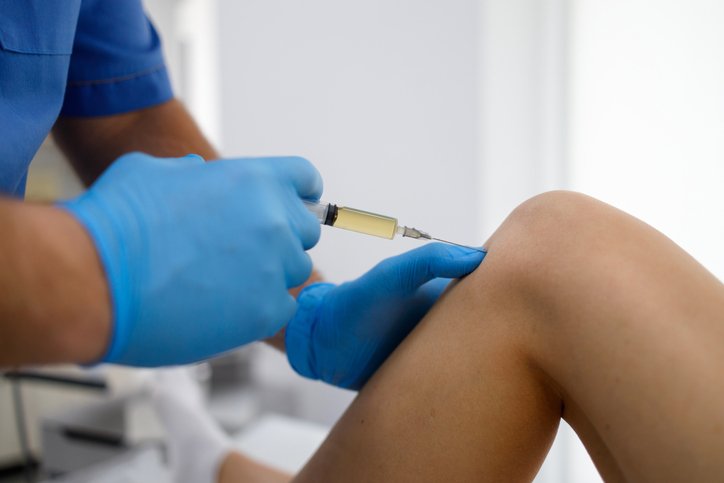
PRP stimulates cellular repair and tissue regeneration, serving as a key tool in the treatment of arthritis, osteoarthritis, and musculoskeletal injuries affecting joints such as the shoulder, knee, ankle, hip, and spine.
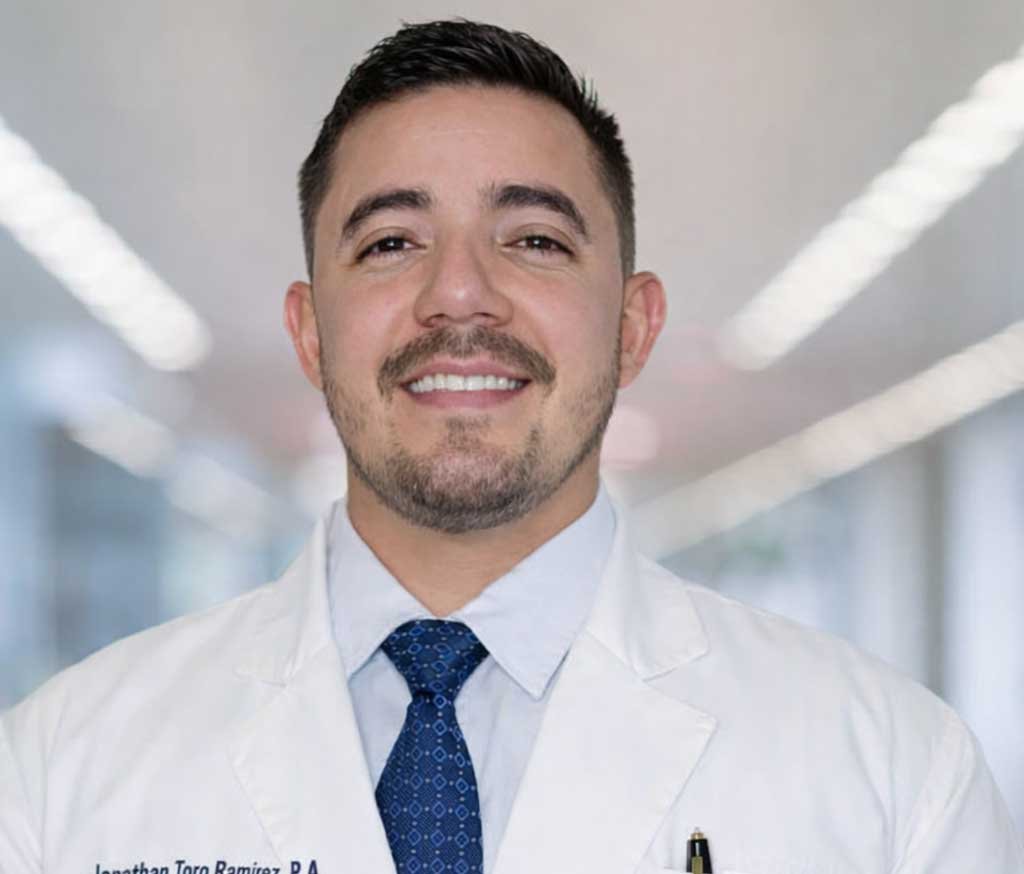
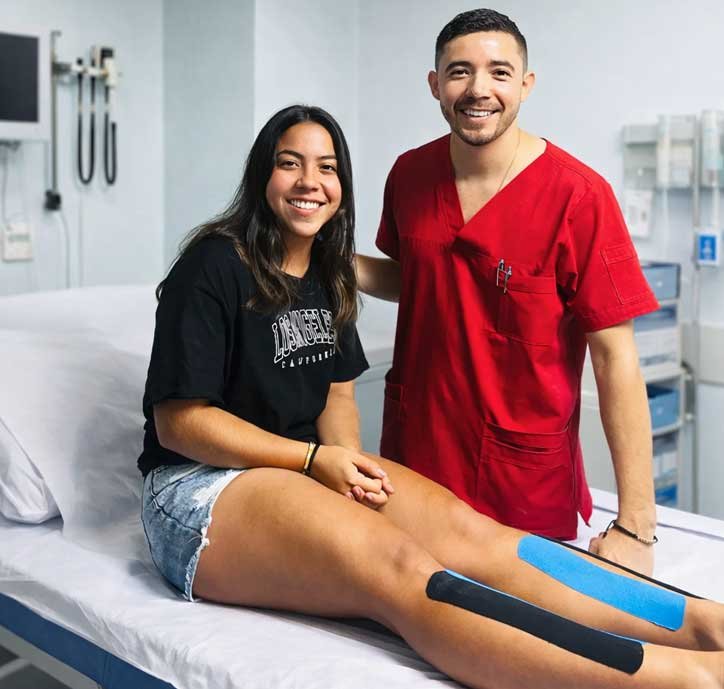
Jonathan Toro Ramírez, a foreign physician with more than five years of experience in sports rehabilitation, orthopedics, and traumatology, has successfully implemented PRP treatments and regenerative rehabilitation protocols for the recovery of ligaments, menisci, tendons, and degenerative pathologies of the spine and peripheral joints, both in general patients and in high-performance international athletes.
Hyaluronic acid acts as an essential Visco supplement that lubricates the joint, protects cartilage, and improves mobility, reducing joint pain.
Exosomes, extracellular vesicles derived from stem cells, modulate inflammation and promote tissue regeneration, representing an innovative frontier within regenerative medicine.
Scientific evidence, supported by international studies and guidelines from the World Health Organization (WHO), demonstrates that the combination of these therapies produces significant improvements in pain relief, functional recovery, and patients’ quality of life.
Chronic joint injuries, arthritis, osteoarthritis, and sports injuries represent a major cause of pain, functional limitation, and decreased quality of life. Conventional treatments, in many cases, only offer temporary relief without promoting regeneration of the affected tissue.
Regenerative therapies based on stem cells, PRP, exosomes, and hyaluronic acid offer an innovative alternative that favors biological and functional tissue repair, reducing damage progression and the need for surgical interventions.
The purpose of this project is to implement and validate a comprehensive protocol, based on scientific evidence, that improves joint function, reduces chronic pain, accelerates recovery times, and contributes to injury prevention, especially in high-performance athletes. It also seeks to train and educate other healthcare professionals, generating a positive and sustainable impact on medical care.
3. Objectives
General Objective
To develop and implement an innovative regenerative rehabilitation protocol that combines stem cells, platelet-rich plasma, exosomes, and hyaluronic acid in order to optimize clinical and functional outcomes in patients with musculoskeletal disorders.
Specific Objectives
Evaluate the clinical effectiveness of the combined protocol in reducing pain and improving function.
Personalize treatments according to the clinical profile of each patient and high-performance athlete.
Monitor tissue regeneration through biomarkers and imaging techniques.
Validate the reproducibility and scalability of the protocol in a clinical setting.
Improve mobility and quality of life in older adults.
Train healthcare professionals in the management of regenerative therapies for chronic diseases such as arthritis and osteoarthritis.
4. Theoretical Framework
Stem Cells
Mesenchymal stem cells have the capacity to differentiate into musculoskeletal tissues and to secrete growth factors that promote tissue repair and regeneration, as well as early healing of ligament and tendon injuries.
Platelet-Rich Plasma (PRP)
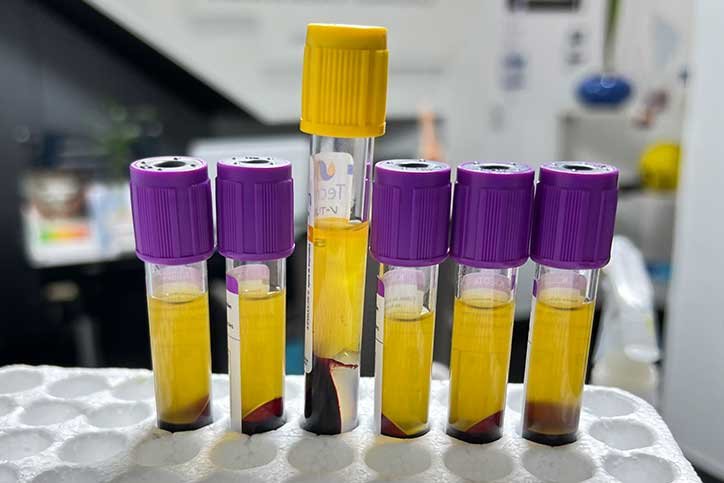
An autologous concentrate of platelets that releases growth factors, stimulating cellular proliferation and tissue repair in ligaments, tendons, and articular cartilage.
Exosomes
Extracellular vesicles derived from stem cells that transport proteins, RNA, and microRNA, modulating inflammation and promoting local cellular regeneration.
Hyaluronic Acid
A natural glycosaminoglycan with viscoelastic properties that improves joint lubrication, protects cartilage, and contributes to earlier functional recovery.
Evidence-Based Regenerative Medicine
The analysis of scientific databases and clinical evidence allows optimization of protocols, personalization of treatments, and prediction of therapeutic response, increasing the safety and effectiveness of the regenerative approach.
5. Methodology
Study Design Prospective pilot study with a control group, lasting 12 months.
Population Patients over 15 years of age with chronic or acute injuries of the knee, shoulder, ankle, hip, or spine, clinically and radiologically diagnosed, as well as high-performance athletes.
Criteria
Inclusion: patients diagnosed with osteoarthritis, tendon injuries, or ligament injuries.
Exclusion: active infections, uncontrolled autoimmune diseases, pregnancy.
5. Methodology
Procedure
Collection and preparation of mesenchymal stem cells.
Collection and concentration of autologous PRP.
Local application of stem cell–derived exosomes.
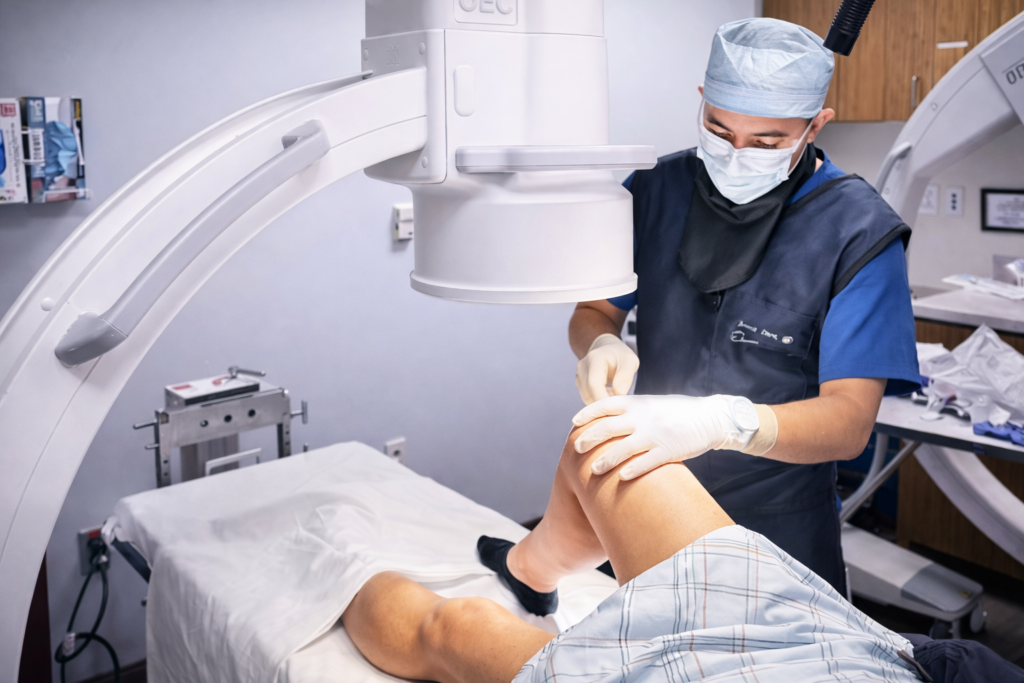
Intra-articular or perilesional infiltration of hyaluronic acid.
Implementation of specific physical rehabilitation protocols.
Continuous clinical and functional follow-up.
Evaluation
Pain scales (VAS).
Functional assessments (WOMAC, DASH).
Imaging studies (MRI and musculoskeletal ultrasound).
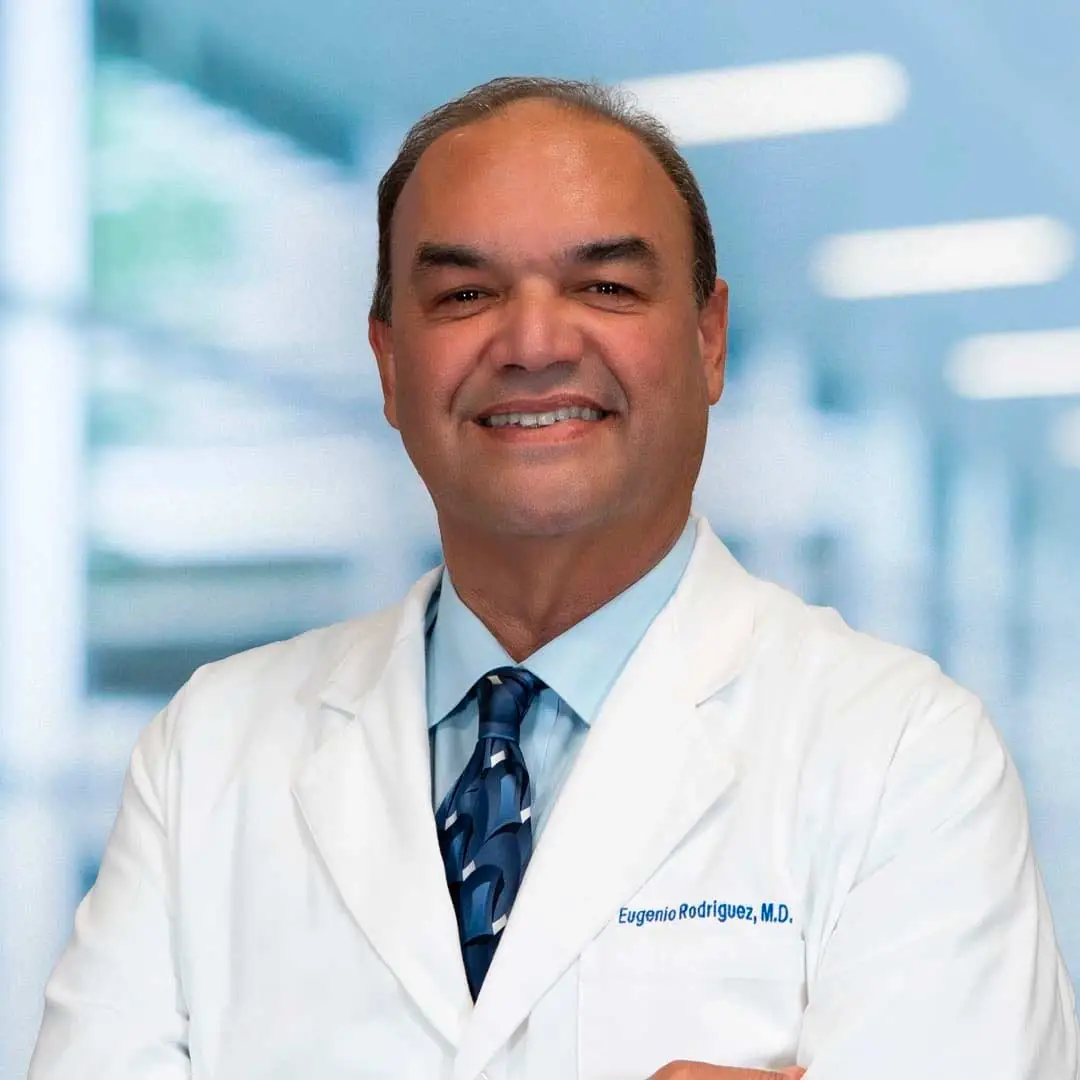
This project will be carried out under the responsibility and supervision of Dr. Eugenio Rodríguez, a trauma surgeon with clinical practice in West Palm Beach, Boca Raton, and Delray, Florida.
Dr. Eugenio Rodríguez also acts as the direct supervisor of Mr. Jonathan Toro Ramírez’s professional contract.
Jonathan Toro Ramírez is a foreign physician who works in the United States as a Physician Assistant, holding a valid legal and professional license that authorizes him to practice in this role and to actively participate in the execution of this project, in accordance with the regulations and standards of the United States healthcare system.
Board-Certified General Surgeon & Wound Care Specialist Founder | Educator | Advocate for Equitable Care Delray Beach, Florida
8. Projection and Impact
This project aims to contribute to strengthening the healthcare system through innovative therapies that improve the population’s quality of life, reduce chronic pain, optimize joint function, and decrease the need for surgeries. It also promotes the continuous training of healthcare professionals and the implementation of high standards of biosafety and quality of care.
9. Bibliography and Appendices
Updated scientific references on stem cells, PRP, exosomes, and hyaluronic acid.
Professional certifications and diplomas obtained in the United States.
Evidence of clinical experience and professional trajectory.
Documentation supporting the legal and professional capacity to provide services in regenerative medicine.